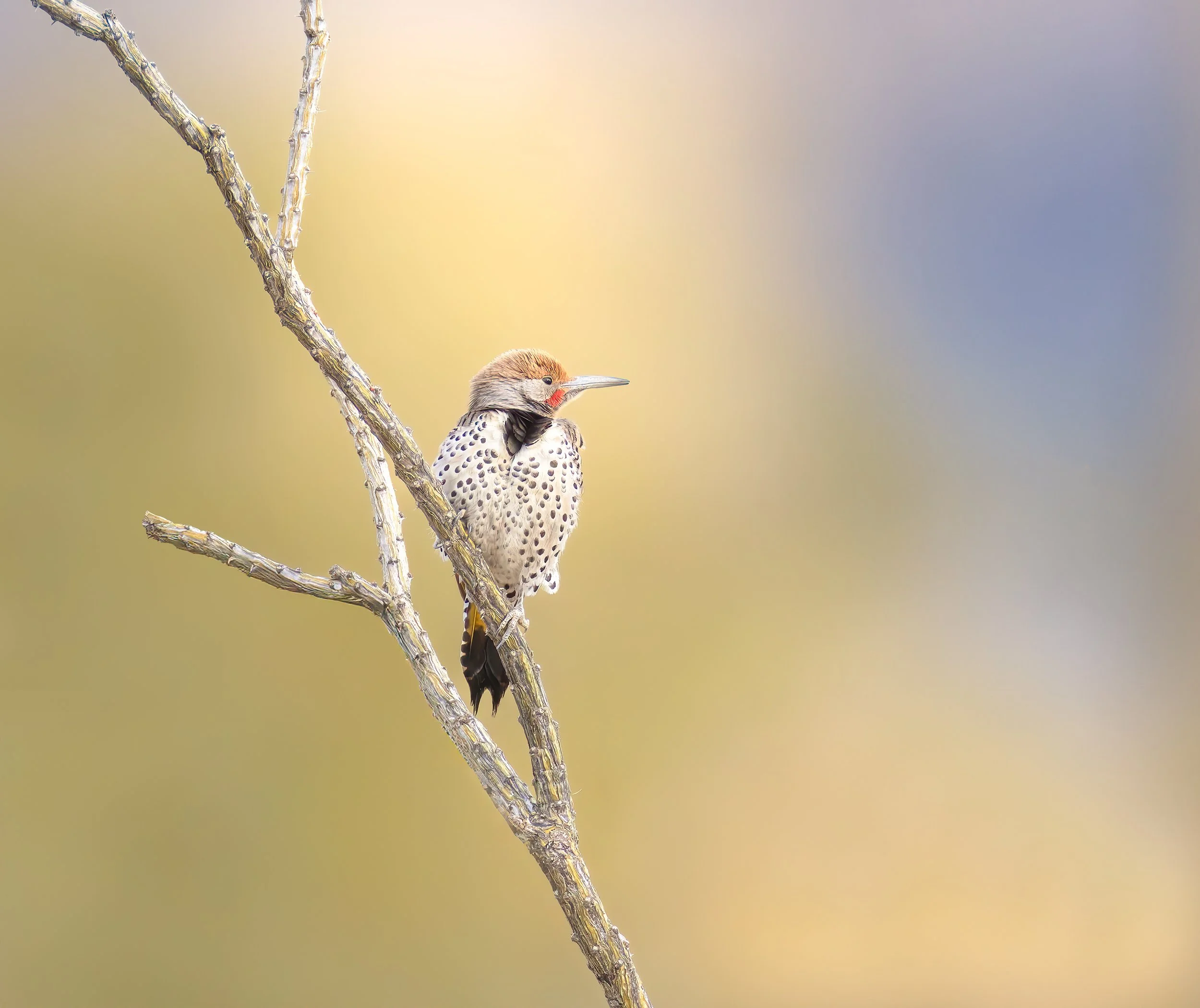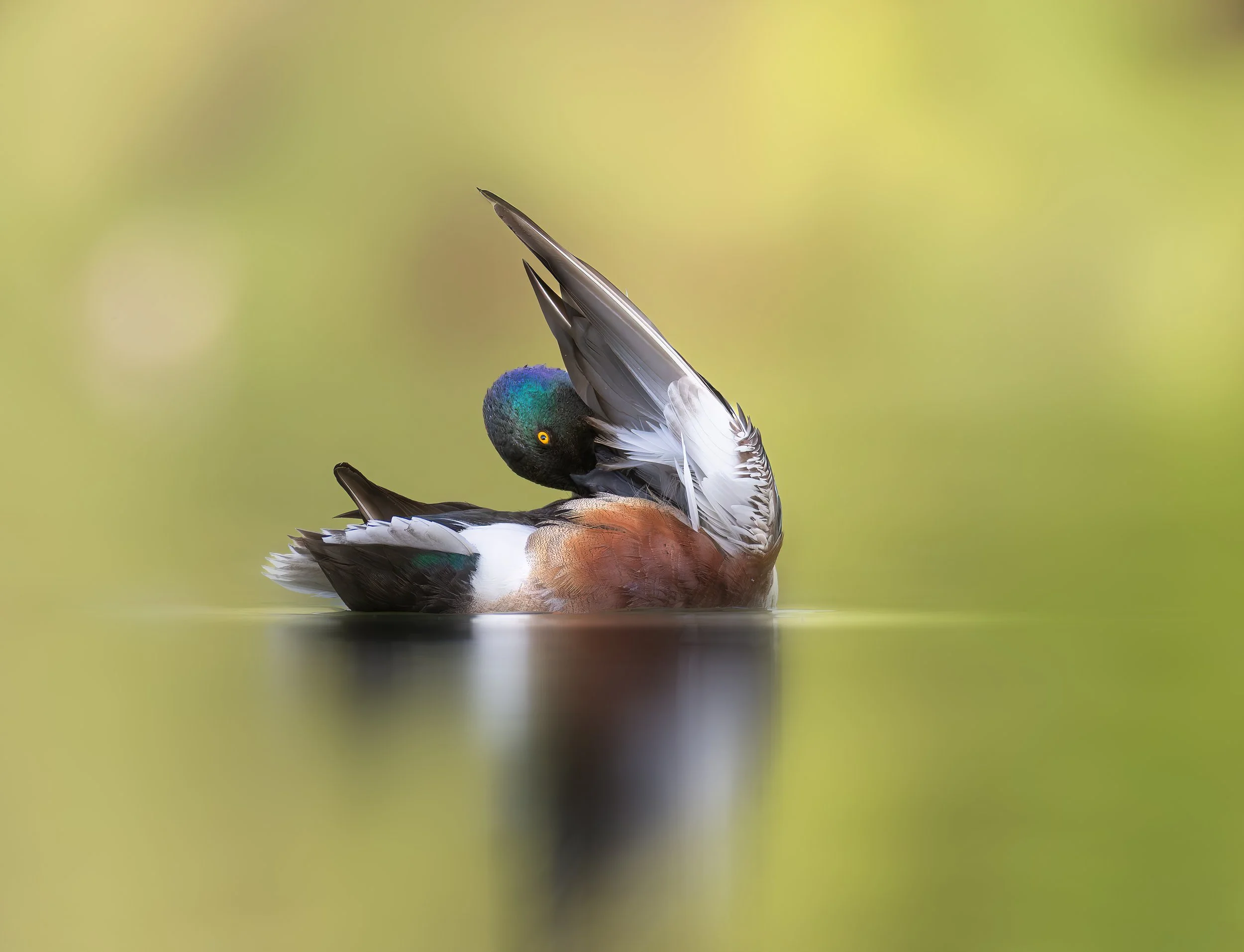
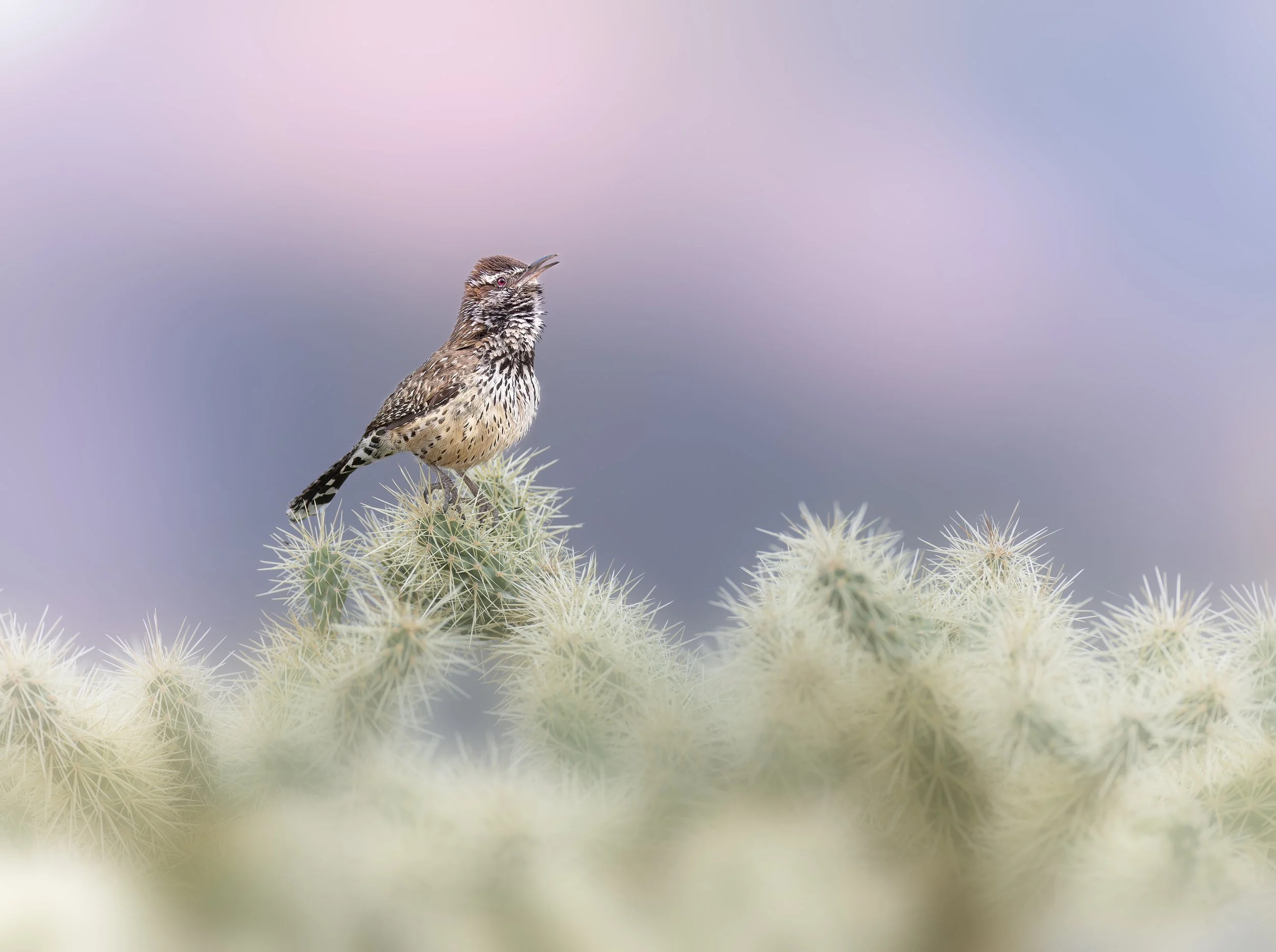
5 Day Spring Bird Photography Workshop
March 28th - February 5th, 2027
Mesa and Green Valley, AZ
3-Day Immersive Field & Editing Experience
Limited to 5 participants
This small-group photography workshop begins in the field, working with birds under natural and uncontrolled conditions throughout the Phoenix area and Sonoran Desert. We then travel south for two days of photography from purpose-built wildlife hides at The Pond at Elephant Head near Green Valley, Arizona.
The first part of the workshop is about learning to find the photograph. We will work with natural light, backgrounds, changing conditions and bird behavior while photographing shorebirds, desert species and Burrowing Owls.
The second part introduces a very different photographic environment. Purpose-built hides, water features, natural perches, flowering plants and specialized setups allow us to slow down, anticipate the photograph and explore opportunities that are difficult to create during traditional field photography.
Throughout the five days, the emphasis remains the same: understanding light, behavior, composition and making intentional decisions before pressing the shutter.
This workshop is best suited for beginner to intermediate photographers who are comfortable with basic camera operation and want to deepen their field technique, understanding of light and behavior, and overall approach to creating wildlife photographs.
“Christopher was extremely professional with good presentation skills. Very patient with the class and easy to be around. He is very knowledgeable of the area and got the class to the right place at the right time. I was able to capture some images that I am happy to have in my portfolio.”
“I attended the workshop with the goal to just have fun and get out in nature with my camera. Once we dug in, I was shocked and amazed at how much I learned in all aspects; Capture, culling and editing. The workshop was very organized and informative. At the end of the workshop I can honestly say that, YES...I did have fun, but I got so much more!”
“Really low key, fun, and fact filled workshop. Many great opportunities to practice technique and improve with help from the instructors.”
Workshop Overview
Length: 5 days
Group Size: Limited to 6 participants
Format: Field instruction + educational and editing sessions + private photography hides
Locations: Mesa, Gilbert, Sonoran Desert, and Southern Arizona
Skill Level: Beginner to intermediate. All experience levels are welcome.
Investment: $2,700.00
This workshop is designed for photographers who want a deeper understanding of:
Working with natural light and backgrounds
Reading and anticipating bird behavior
Composing in uncontrolled environments
Working from low perspectives
Creating consistent, intentional images
Photographing from purpose-built wildlife hides
Working with natural perches and controlled photographic opportunities
Exploring specialized wildlife photography techniques
Developing a practical post-processing workfloww
Two Environments. One Approach.
One of the things that makes this workshop different is the opportunity to photograph birds in two very different environments.
For the first three days, we work primarily in uncontrolled field conditions. The bird chooses where to land. The light changes. Backgrounds can be difficult. Sometimes the best photograph means moving several feet, getting lower, waiting for better light or simply recognizing that the photograph isn't there yet.
This is where field craft matters.
For the final two days, we change environments completely.
At The Pond at Elephant Head in Southern Arizona, we will work from purpose-built photography hides with water features, natural perches, flowering plants and other carefully designed photographic setups.
Instead of searching for the photograph, we can begin thinking about how the photograph might come together.
Both approaches require patience, observation and an understanding of light. Learning to work effectively in both environments can change the way you approach bird photography long after the workshop is over.
What’s Included
All guided field sessions
All classroom and editing instruction
Two full days of private hide photography in Southern Arizona
Access to both pond and mountain photography setups
Natural perch and water setups
Hummingbird photography opportunities
Specialized wildlife photography setups
Image review and personalized feedback
Small-group learning environment
Hands-on instruction throughout the workshop
What’s Not Included
Transportation
Lodging
Meals
Camera gear or computers
Participants are responsible for all travel and meal arrangements and for bringing their own photographic equipment.
Opening Evening – Orientation & Foundations
We begin with an evening classroom session in Mesa.
We will cover:
Participant introductions
Workshop overview and logistics
Camera setup for field conditions
Core principles of bird photography
Working with natural light and backgrounds
Anticipating behavior
Positioning and perspective
Preparing for the five days ahead
Day 1 – Shorebirds & Waders
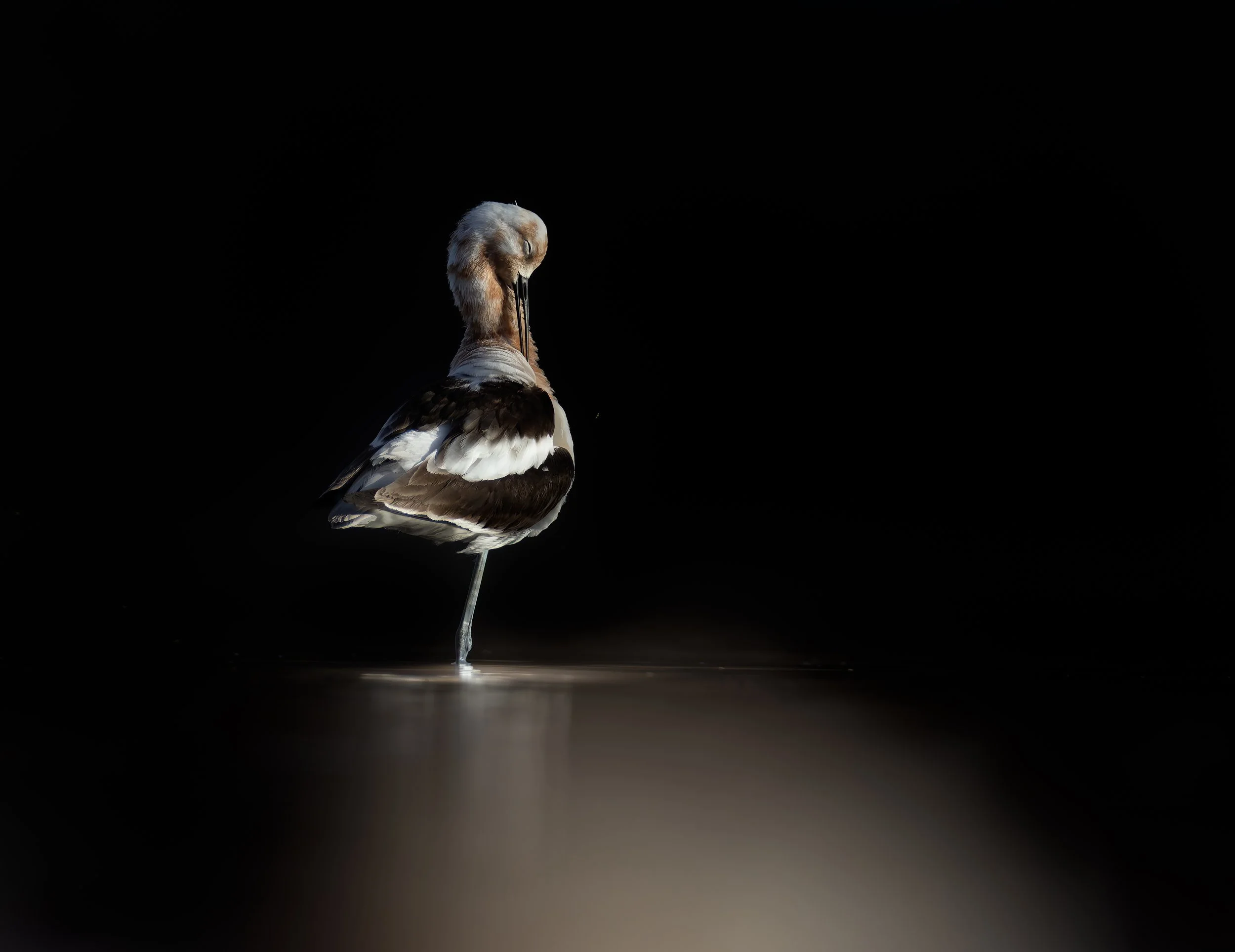
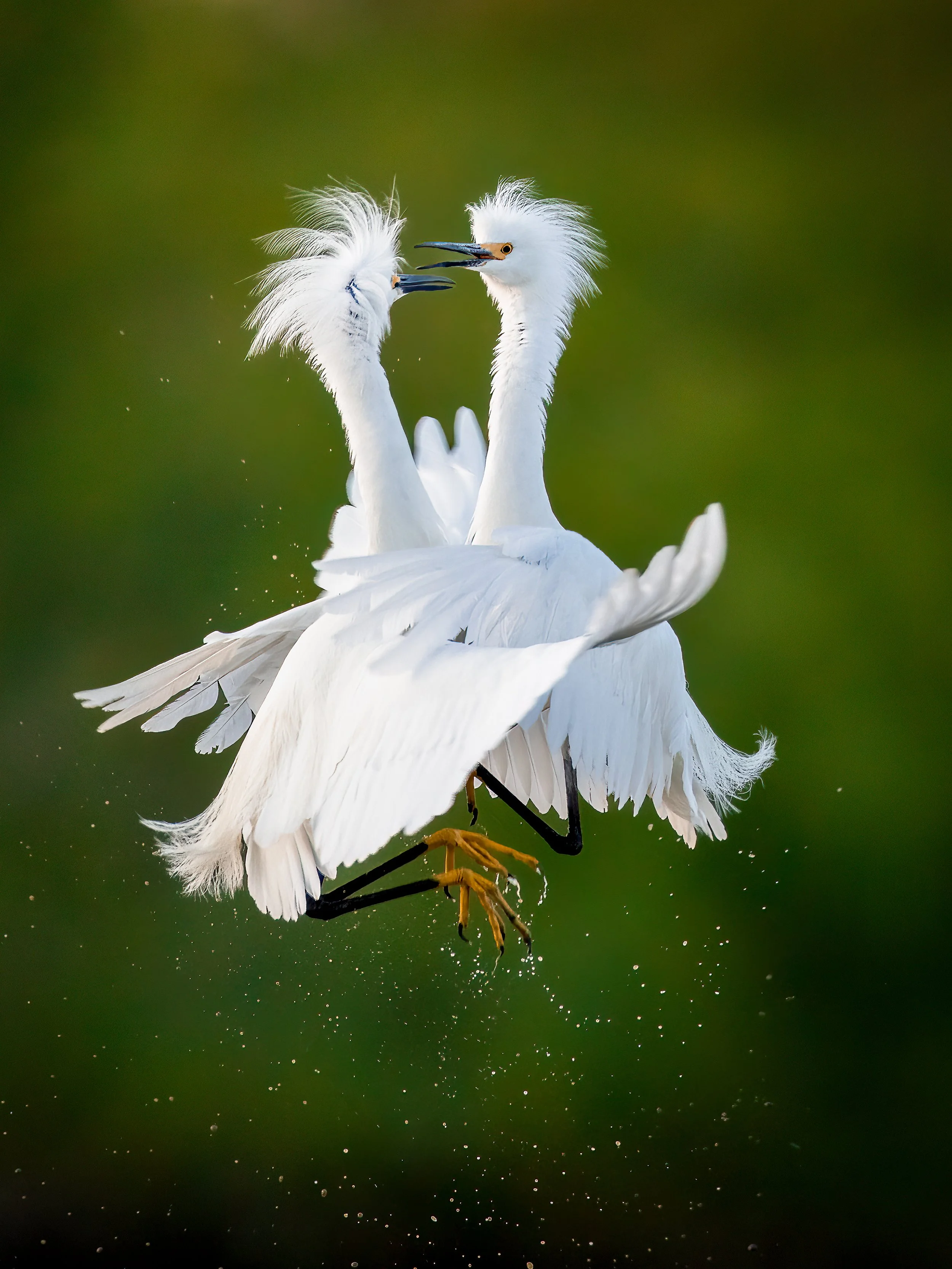
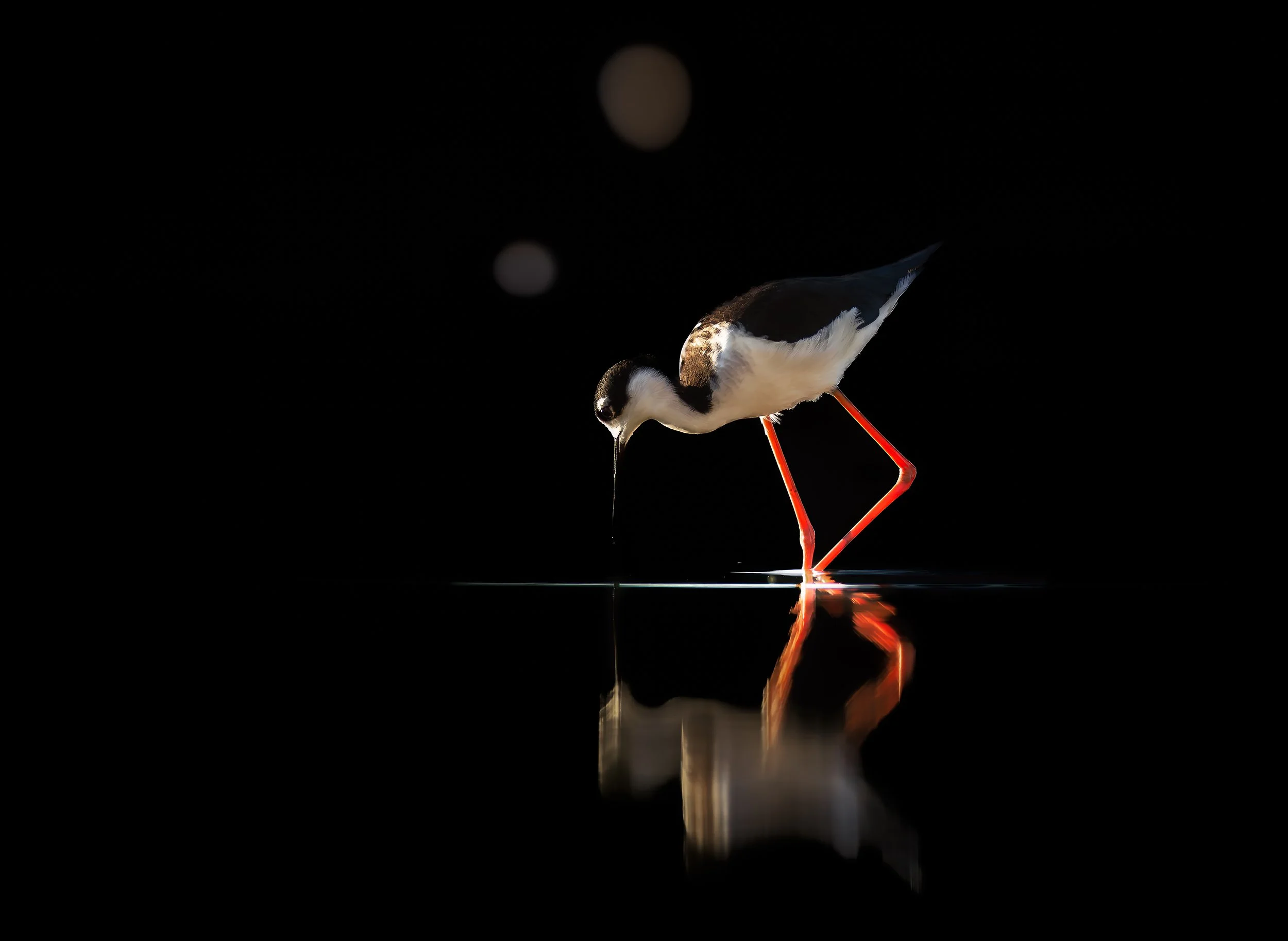
Early morning photography session focused on shorebirds and waders including avocets, black-necked stilts, snowy egrets, and greater yellowlegs. This session emphasizes working with soft sunrise light, low-angle perspectives, and natural behavior in active feeding environments.
We will be photographing at the Gilbert Riparian Preserve, a location known for its exceptional bird access, clean sightlines, and layered, natural backgrounds. The preserve allows for close working distances, low-to-the-ground shooting angles, and a remarkable variety of species, making it an ideal setting for both learning and image creation.
Afternoon:
Editing and image review session using images captured that morning:
Image selection
Exposure and tonal balance
Composition review
Workflow fundamentals
Evening:
Return to the same location to photograph under different light and environmental conditions.
Day 2 – Birds of the Sonoran Desert
Morning:
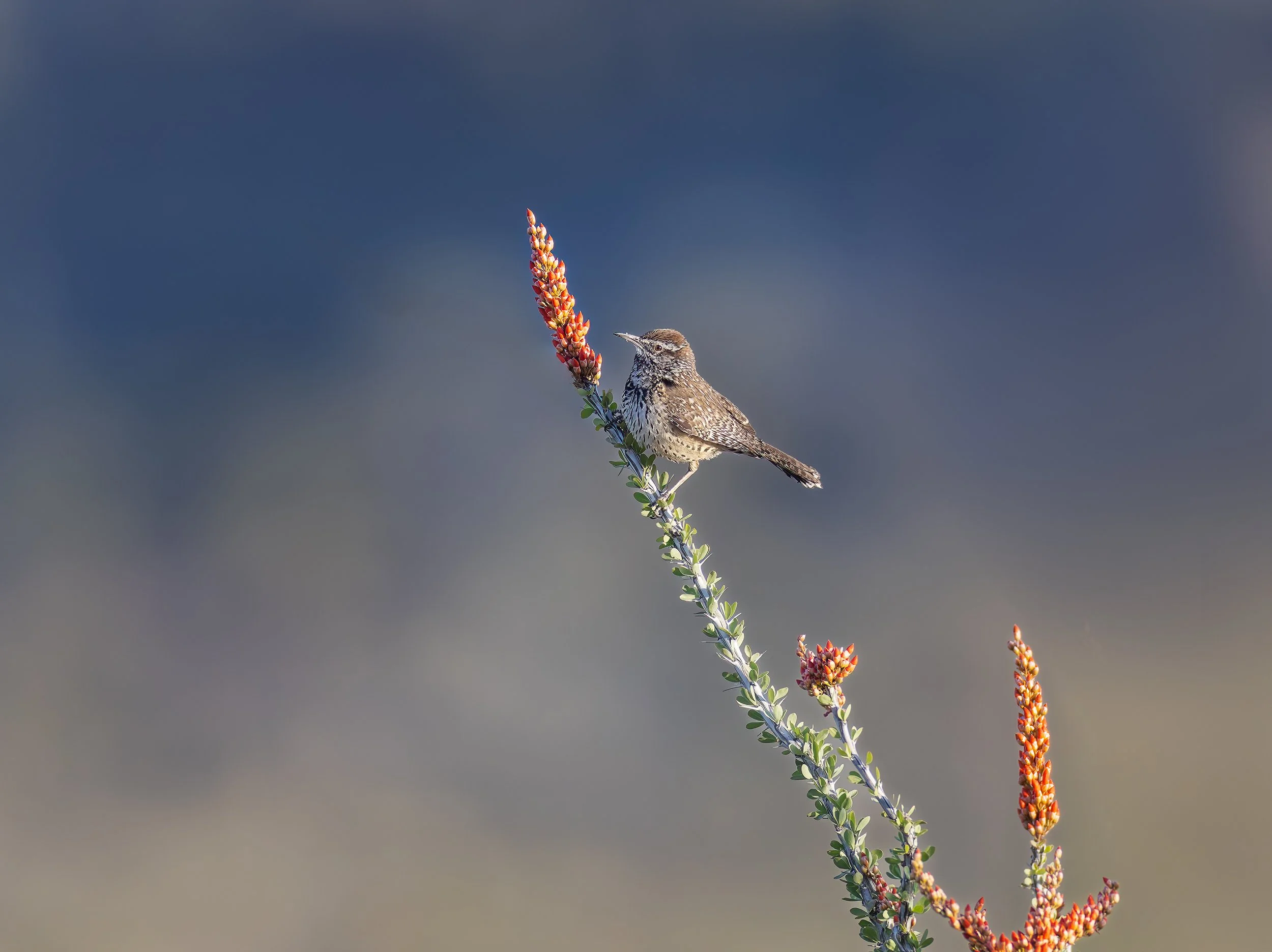
Field session in the Sonoran Desert photographing cactus wrens, black-throated sparrows, and other desert species. Focus on background control, subject isolation, and directional light.
Afternoon:
Editing session and group critique:
Refining field images
Managing complex backgrounds
Preparing images for print or web
Evening:
Sunset desert field session emphasizing warm directional light and silhouette opportunities.
Day 3 – Burrowing Owls & The Road South
Morning
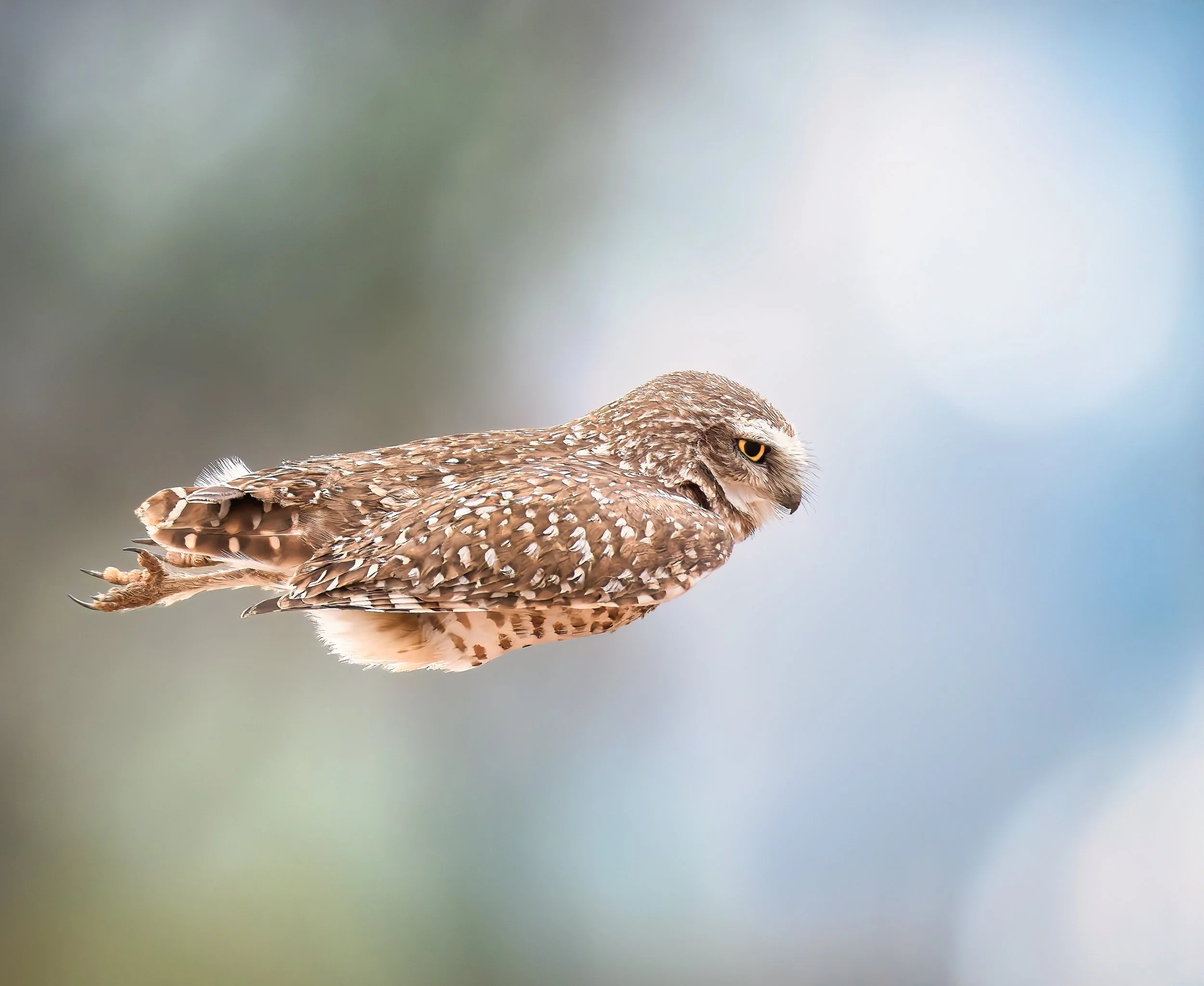
Our final Phoenix-area field session focuses on one of Arizona's most charismatic birds: the Burrowing Owl.
We will work at eye level whenever conditions allow, paying particular attention to perspective, behavior, background selection and changing morning light.
Midday
Following the morning session, participants will have time for lunch, packing and preparation for the second half of the workshop.
Afternoon
We leave the Phoenix area and travel south toward Tucson and Green Valley.
Participants will check into their Southern Arizona accommodations for two nights.
Evening
Rather than scheduling another intensive field session, the evening will give everyone an opportunity to have dinner, prepare equipment and discuss the very different style of photography we will begin the following morning.
We will review hide etiquette, equipment setup, photographic strategy and what to expect during our time at The Pond at Elephant Head.
Workshop Schedule
Day 4 – The Pond at Elephant Head
The second half of our workshop begins before sunrise at The Pond at Elephant Head in Southern Arizona.
This private photography location provides an entirely different experience from our first three days in the field.
Purpose-built hides allow us to photograph wildlife at carefully designed water and feeding areas with natural perches and backgrounds.
Morning
We begin with early morning bird photography from the hides.
Rather than moving through the landscape looking for subjects, we will settle into position and allow the activity to develop around us.
This creates an opportunity to concentrate on:
Light direction
Background selection
Perch choice
Subject position
Head angle
Behavior
Anticipating the moment
Afternoon
After a midday break, we return for additional photography using different setups and locations.
Depending upon conditions and wildlife activity, opportunities may include hummingbirds, desert species and specialized wildlife setups.
Evening
Our day may continue into specialized evening photography, including potential owl, bat or other wildlife opportunities when conditions allow.
Specialized lighting and equipment for these photographic setups are provided at the location.
Day 5 – Hides, Light & Intentional Image Making
Our final day returns us to the hides for another full day of photography.
Participants will have opportunities to rotate through different positions and setups, giving everyone the chance to work with different backgrounds, light and species.
By this point in the workshop, the goal is to bring together everything we have worked on during the previous four days.
Light.
Behavior.
Background.
Perspective.
Composition.
Timing.
The environment may have changed, but the fundamentals haven't.
Our final sessions are about slowing down, recognizing what is happening in front of the camera and making deliberate choices about the photographs we want to create.
Depending upon wildlife activity and conditions, the day may also include hummingbirds, reptiles and specialized evening photography.
About The Pond at Elephant Head
Located in Southern Arizona near Green Valley and the Santa Rita Mountains, The Pond at Elephant Head is much more than a place to photograph birds. It is a private wildlife photography sanctuary that has been developed specifically around creating exceptional photographic opportunities with the birds and wildlife of the Sonoran Desert.
The property has a long history as a destination for serious wildlife photographers and has hosted photography workshops and programs associated with the Tucson Bird Alliance's Southeast Arizona Birding Festival, as well as workshops led by nationally and internationally recognized wildlife photographers.
Today, the property is owned and operated by Dano Grayson, a biologist, field researcher and professional wildlife photographer and videographer who has worked with birds and wildlife around the world. That combination of natural history knowledge and photographic experience is an important part of what makes the Pond special. The setups aren't simply designed to attract birds. They are designed with photography in mind.
Our group will have access to two distinct photography areas, including pond and mountain settings. Purpose-built hides place photographers close to the activity while allowing the wildlife to behave naturally around them. Native and natural perches are carefully positioned around feeding and water areas. Flowering plants and nectar feeders create opportunities for hummingbird photography, while seed and suet stations attract many of the resident and seasonal birds of Southern Arizona.
But what makes this experience particularly exciting is the opportunity to work in an environment where so many of the elements we normally search for in the field have been thoughtfully considered.
The perch. The background. The direction of the light. The distance between the subject and background. The photographer's position.
Instead of walking through the desert hoping all of those pieces come together at the same moment, we can settle into a hide, study the scene and wait for the wildlife to come to us.
That changes the way you photograph.
You begin anticipating rather than reacting. You can watch how the light changes across a particular perch. You can recognize where the strongest background will be before a bird arrives. You can think about head angle, pose and behavior instead of simply trying to get the subject in the frame.
It becomes something very close to nature's studio, except the subjects are wild and the environment is real.
The possibilities also extend beyond traditional bird photography. Depending on the season and conditions, the property offers opportunities for hummingbirds, desert songbirds, owls, reptiles and other wildlife. Specialized lighting, triggering systems and photographic setups can also open the door to types of wildlife photography that most photographers rarely have an opportunity to experience.
That's one of the reasons The Pond at Elephant Head has become a destination for wildlife photographers and photography workshops from around the country.
For our workshop, it also provides the perfect counterpoint to the first three days.
We will have spent those days working in completely uncontrolled environments, learning to find good light, recognize backgrounds, anticipate behavior and put ourselves in the right position.
At Elephant Head, we get to approach those same fundamentals from the other direction.
We can slow things down. Study the light. Consider the background. Think about where the bird might land before it gets there.
The environment changes. The fundamentals don't.
And that is exactly why we are including The Pond at Elephant Head in this extended workshop.
As with all wildlife photography, no particular species or behavior can ever be guaranteed. Wildlife activity varies with season, weather and natural conditions. That's part of the experience and part of working with wild subjects.
Investment
Early Registration
$2,495 per participant
Available through January 15, 2027
Standard Registration
$2,995 per participant
Applies after the early registration deadline.
A $750 non-refundable deposit secures your space and applies toward the total workshop fee.
Remaining balances are due February 10th
Because this extended workshop includes private photography locations and advance reservations, spaces are intentionally limited to six photographers
Cancellation, Weather & Transfer Policy
All workshop registrations require either full payment or a $400 non-refundable deposit to secure a space. Due to the limited group size and the advance planning required, all payments are non-refundable once received.
If a participant is unable to attend, their registration may be transferred to another individual with prior written approval. Transfers must be completed no later than February 10, 2027.
This workshop is dependent on weather and natural conditions. In the event of unsafe weather, field sessions may be adjusted, delayed, or rescheduled as needed. Every effort will be made to provide comparable learning opportunities if conditions require changes to the schedule. No refunds will be issued for weather-related adjustments.
In the unlikely event that the workshop must be canceled by the instructors due to unforeseen circumstances, all payments will be fully refunded.
Participants are responsible for their own travel arrangements, accommodations, meals, insurance, and equipment.
Lodging & Transportation
This is a destination workshop covering two regions of Arizona.
Participants should plan to stay in the Mesa or Gilbert area for the first portion of the workshop.
Following our Day 3 Burrowing Owl session, we will travel approximately two hours south for the Southern Arizona portion of the workshop.
Participants will need two nights of lodging in the Tucson/Green Valley area to allow for early morning access to The Pond at Elephant Head on Days 4 and 5.
Specific hotel recommendations and meeting locations will be provided.
Participants are responsible for their own transportation throughout the workshop. Carpooling may be coordinated among participants when practical.
👉 Download the Lodging Guide (PDF)
Includes Hyatt Place Gilbert, Hampton Inn & Suites Phoenix East Mesa, and additional nearby options.
Booking early is strongly recommended due to seasonal demand.
Booking
Use the scheduling link below to reserve your spot. Once booked, you will receive a confirmation email with full logistical details and preparation guidance.
Five Days. More Than a Checklist.
This workshop isn't about how many species we can check off a list. It's about spending five days in the field working on the things that consistently make us better bird photographers.
We will photograph in wetlands, the Sonoran Desert, around Burrowing Owl habitat, and eventually from purpose built photography hides in Southern Arizona. Each location presents a different set of challenges and opportunities. Some mornings we may be working from ground level, trying to find the right angle and a clean background. At the hides, we may spend time watching the light on a particular perch and waiting for a bird to give us the moment we're looking for.
The locations and subjects will change throughout the week, but the things we're paying attention to won't. Light, behavior, backgrounds, perspective and composition still matter.
The goal is to leave the workshop not only with some great photographs, but with a better understanding of how to recognize and create those opportunities the next time you're in the field on your own.
Got Questions About the Workshop?
If you’re unsure whether this workshop is the right fit, I’m happy to help.
Use the contact form for detailed questions
Or click the chat icon at the bottom of the page to message me in real time
I’ll respond as quickly as possible and help you decide if this experience aligns with your goals.
Recommended Gear to Bring
Camera & Lenses
DSLR or mirrorless camera body
Telephoto lens (300–400mm minimum recommended; longer lenses welcome)
Wide or mid-range lens for environmental images
Support Systems
Tripod with gimbal head (strongly recommended for optimal tracking and stability)
Ground pod, skimmer pod, or other low-profile support
Power & Storage
Extra batteries
Memory cards
Laptop with Lightroom and/or Photoshop installed
Power cables, card readers, and external storage drives
Low-Angle Shooting Accessories (Strongly Recommended)
Much of our field work will involve low-to-the-ground shooting, particularly with shorebirds and burrowing owls. To remain comfortable and mobile, students are encouraged to bring:
Small ground cloth, towel, or trash bag (for damp or muddy ground)
Ground pod or low-profile support
Kneepads or lightweight mat (optional but helpful)
Clothing you don’t mind getting dusty or wet
These items greatly improve comfort, stability, and shooting perspective, allowing you to work at eye level with your subjects for longer periods.
Personal Items & Field Comfort
Weather-appropriate clothing for morning and evening shoots
Proper footwear for short hikes and uneven terrain
Hat, sunscreen, and personal sun protection
Water and snacks
Your Instructors
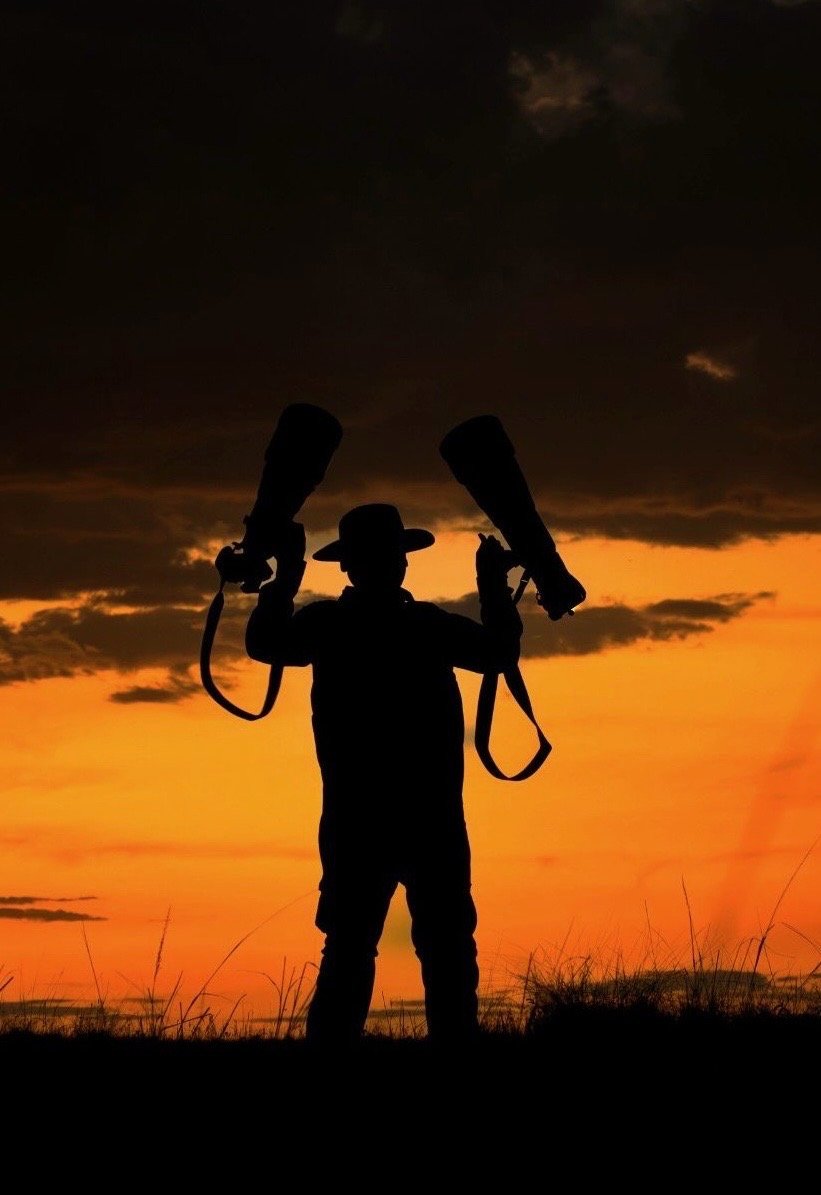
Christopher Forslund
Christopher Forslund is a wildlife and avian photographer whose work is shaped by quiet light, natural behavior, and extensive time in the field under real-world conditions. His approach emphasizes patience, observation, and intentional image-making in uncontrolled environments.
With a strong focus on field craft and ethical wildlife practices, Christopher’s instruction centers on reading behavior, working with available light, and making practical compositional decisions as situations unfold. He is known for a calm, methodical teaching style that meets students where they are, helping them build repeatable skills rather than relying on chance.
In this workshop, Christopher will lead all shorebird, desert bird, and burrowing owl field sessions, along with guided editing, image review, and practical workflow instruction from capture through final presentation. Students will receive direct feedback throughout both the field and classroom portions of the workshop.
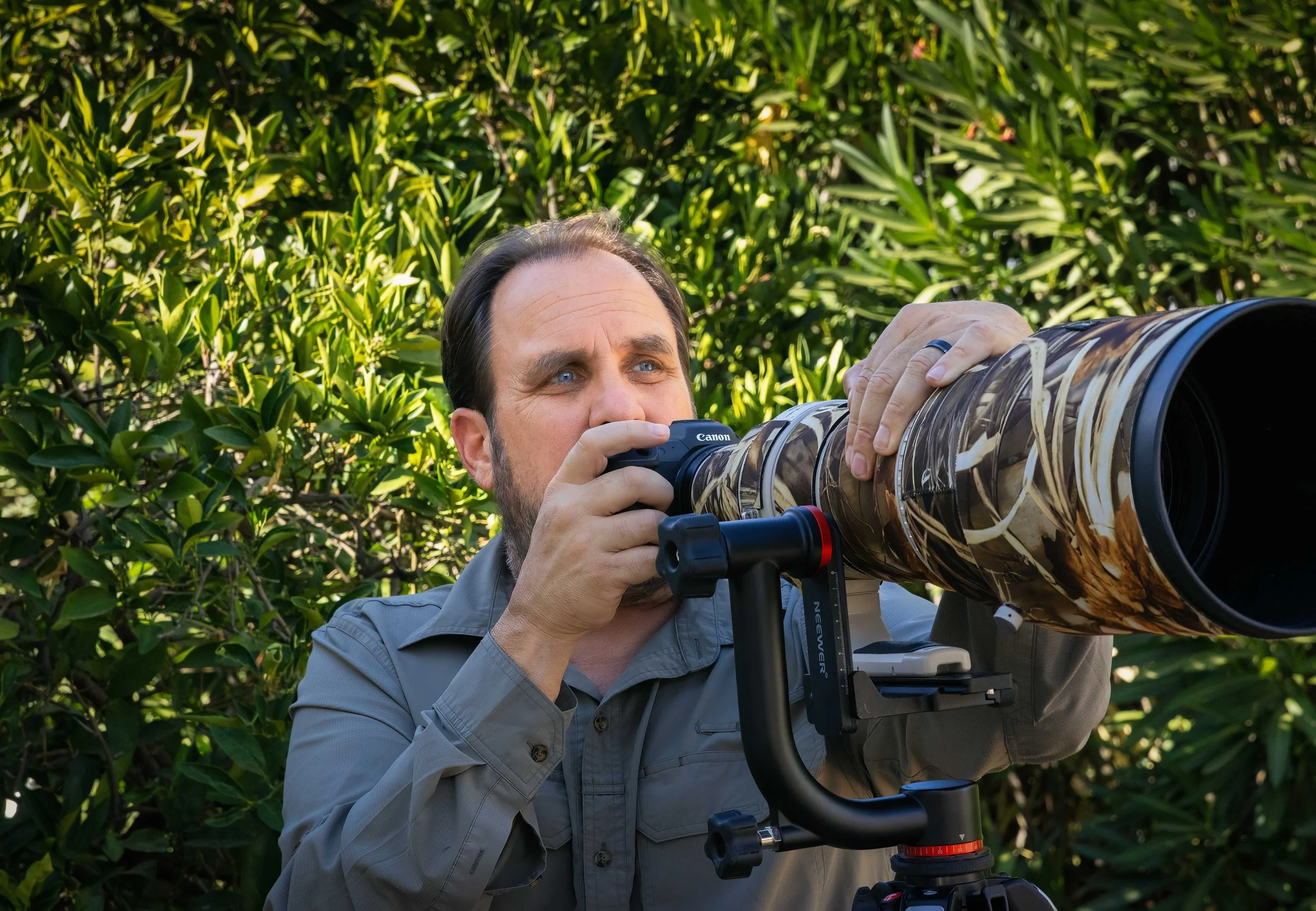
Sathya Sayee
Sathya Sayee is a respected bird photographer and educator known for his deep knowledge of avian behavior, technical precision, and ability to anticipate decisive moments in the field. His work reflects a strong command of light, timing, and composition, particularly in fast-moving and behavior-driven scenarios.
As an instructor, Sathya excels at breaking down complex shooting situations into clear, practical guidance. He brings a strong technical perspective to exposure, autofocus strategy, and wildlife-specific camera setup, helping students gain confidence in rapidly changing field conditions.
During this workshop, Sathya will assist in field instruction, provide technical guidance on camera setup and tracking behavior, and support students throughout shooting sessions.
You can see Sathya’s work here - https://www.trystlight.com/